As a business owner, one of your headaches might be planning & budgeting for that pesky monthly utility power bill. Utility usage and costs differ month to month, and is dependent on a multitude of factors. However, what if you knew how to control it, and even better, manage it to save you time & money? Great news, Sunlight Energy Group can help!
Your power utility bills have three main components:
-
Supply charges – the rate that you pay a company to generate power for your business
-
Delivery charges – the rate that you pay the utility to deliver power to your business
-
Usage – how much electricity or gas you use
For all of you “numbers” people out there (we love numbers!), here is a simplified equation to calculate your total energy cost:
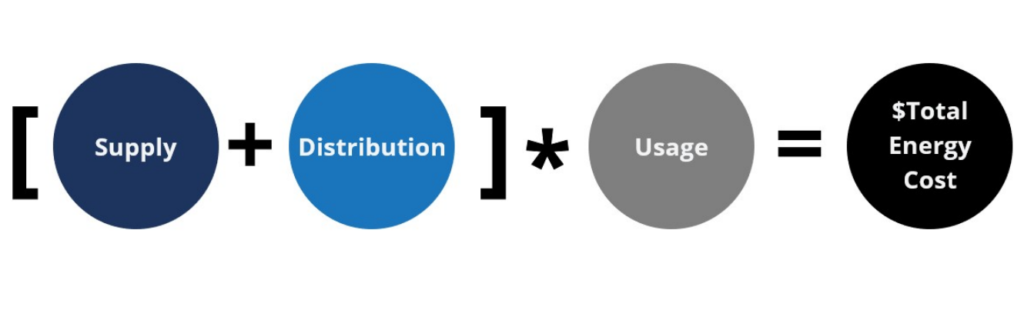
Now, let’s briefly dive into each main component and highlight some of the ways that you can manage and positively manipulate your monthly utility power costs!
Supply: Your supply charges are what you must pay a supplier to generate the power required for your business. As a business owner operating in a deregulated energy state, meaning you have the choice of choosing your energy supplier, you have the ability to manage your supply rates. Failing to secure a competitive supply rate with a reliable supplier can greatly increase your power costs, especially when market rates shoot up due to abnormally hot/cold weather conditions, weak supplier bandwidth, or shortages due to natural disasters (think Texas!). Learning how to navigate the potential pitfalls in supplier contracts and implementing best-practices procurement strategies that are customized to your business requirements are important for managing your supply costs.

Delivery: Your delivery charges are what you must pay a utility to deliver power to your business. A sizeable chunk of your delivery charges is based on your energy demand, which is the maximum amount of power that your business uses at a certain time. Utilities charge for this because they need to make sure that they can maintain, fix, or upgrade their power delivery systems to be able to accommodate the maximum amount of power that their customers use at any given time. Part of a well thought out energy management plan should include how to contract and manage your demand.